An Essay

Hello again Reader,
From your temporal perspective it is past Nicholas who is writing. Presently present Nicholas is somewhere far north no doubt skiing and ice fishing and yapping with a good friend. Possibly wondering if this is going to auto-post correctly. But as an older past Nicholas promised, today’s past me is going to give you something to hold you over until present me returns from his little adventure. (He sure keeps filling his schedule with things other than writing).
And that something is an essay-
Concerning History, Both Fictive and Real
We live in a world chalked full of micro-consumption. Bursts of data are shot through our cornea to contend with the limited processing power we possess. In the world of creatives, this is in equal parts a boon and a curse. You might find singularly unique creations to inspire you, or, regurgitated factoids about fictional universes that do nothing but strip the actual value from the original work, (as from the Lord of the Rings, Warhammer, etc.). Add AI to the mix and you get the most soulless stuff you can imagine. Reddit threads, Discord channels and online forums exist solely to ‘theorycraft’ and speculate on these worlds. And while there is nothing inherently wrong with loving and caring for a work of fiction, using so much time and energy to be an unpaid scribe and historian for said worlds robs one from creating something of their own.
That’s why I argue for History. Specifically history as something to consume and use as inspiration. Double-specifically the history of our world. I make this specification for a reason. That being that I’ve noticed, in myself and in the wider gestalt of people online and creatives in general, that many tend to lean toward fiction as an inspiration for fiction. Is this a bad thing? No. I would be a hypocrite if I’d suddenly espouse that consuming fiction isn’t productive for creativity. Rather I am against a certain kind of fiction, namely what I call ‘Encyclopedic Fiction’, or more accurately the act of leaning on said fiction alone for inspiration. Think using the rich history of a fictional universe as inspiration for your own, (I will expand on this in a later paragraph).
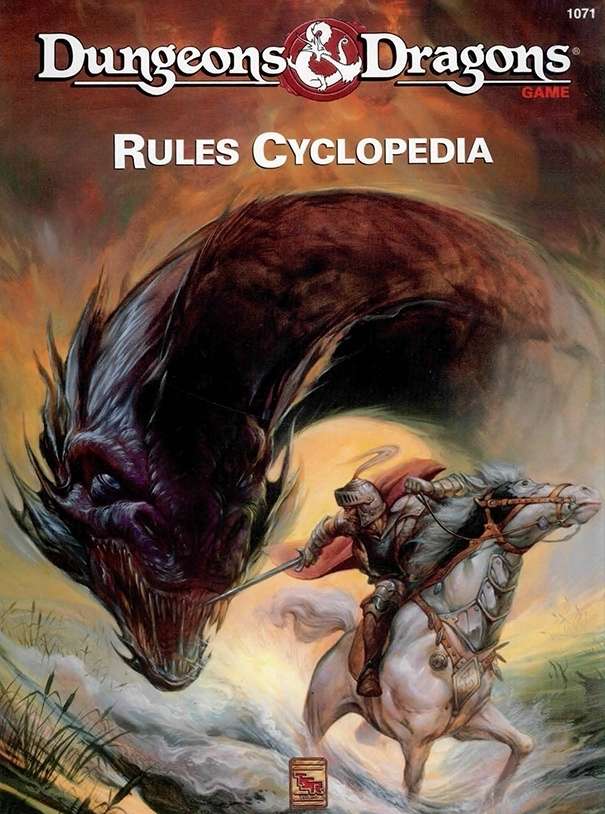
I use the term Encyclopedic Fiction to describe works that are mostly in the realm of role-playing sourcebooks or TTWG (tabletop wargame), rulebooks, (Top-10 lore videos and ‘Did you know’ factoid-shorts fall into this category as well). These compendiums of lore do tickle the imagination, but they are a framework for you to play and create within their worlds. They are great steppingstones, but I find that focusing too much on them can lead one down rabbit holes of lore tidbits that, if we’re being honest, will not serve you in the long run. Recalling a detail about how character X’s second cousin’s great-grandfather was secretly pulling the strings in a northern kingdom that fell in the war of something-or-other, is not the flex you might think it is. And, at some point, in a vein attempt to utilize the gathered info, you might start making Instagram reels or TikToks (yuck) of your own about said lore tidbits.
Now, you might say: “Nicholas, similar books, videos and reels etc. exist about world history as well.” To which I reply: yes. The difference resides in that in most cases I could, in theory, travel to a location mentioned in said videos or reels and see the place or thing or monument for myself (discounting the Colossus of Rhodes. RIP). With fiction, you can’t do that. At most, you can go to a place where, say, a movie adaptation of a novel was filmed; (think New Zealand for LOTR). But as you see, we are back in reality. Back on our Mundus Ordinarius. But the thing is, our world is far from ordinary. History is brimming with stories that actually happened (most likely), and which serve as amazing sources of inspiration. Say you write a story based on an obscure happening in some little dukedom in the early middle-ages, and in the author’s note or afterword you mention this. You lead your reader to look it up, and so they do. They might get sucked in, and plunge down further until they find their own little obscure historical detail that kindles the embers of their creative spirit. Or in my terms, opens up the connection for a ZIP-file to shoot into their gray-matter. Hell, on a re-read, now that they know more about the thing you based your story on, it becomes far more alive and enjoyable.

The best fiction, the timeless classics, almost always have a strong cornerstone that is sourced from reality, and thus can be used as inspirations themselves. I’ve mentioned the Hyperion Cantos and Canterbury Tales before, but what I’ve neglected to mention is just how much real world history Dan Simmons manages to cram into the story. After reading Hyperion I was actually more interested in our world than in the fictive one he created. I started reading Keats, whom I did not know before, for example.
But if one uses Encyclopedic Fiction or fiction in general as sole sources of inspiration, something weird happens. Now, I speak from my personal experience, so I don’t assume this applies to everyone. But when I was in my foundling days of writing I did exactly what I’m arguing against now. I tried to write stories with, say, Warhammer or Lord of the Rings, Assassins Creed or the Dunwich Horror as foundations to my stories. I failed miserably. Each time it felt like what I wrote was a bad re-skin of something better. I tried making something original, unable to recognize that in wanting to create “something like”, I would never create something by me. Then, couple years later, I realized that basing fiction on fiction is a process of dilution which, after several iterations, becomes thin and shallow, (see fantasy-slop and worldbuilding, plot-outlining, character creation etc. etc.). Hence why great writers always say, “Write what you know”, because that is a ‘personal history’, i.e. based in reality, i.e. grounded, i.e. immersible. Mixing personal history with real world history creates something new, or at least new to us.

To add one more paragraph Pro usage of Encyclopedic Fiction, I do recognize that there are folks out there who make amazing, (and I do mean AMAZING), fan works based off already established properties. If the Emperor had a Text-to-Speech Device and Hunter the Parenting are my top two examples. I still rewatch the former and eagerly await for new episodes from the latter. Go binge them: they are good! Nothing I say here to support them does justice, and rather you should go watch them for yourselves to understand just how good they are. Also, SCP’s, but for brevity’s sake we’ll not dive into them more. As you see, they are using the works as intended. I.e. making something within the worlds that are described, i.e. a fan-fiction, which, is the best way to use Encyclopedic Fiction. I.e. build atop, add or subtract. Think Dungeons & Dragons.
To conclude and reiterate, real world history is the way to go. While Encyclopedic Fiction is brilliant and a lot of work has been put into each respective tome, they become a crutch and are only useful as frameworks for fan-works within their given worlds. Our shared history on the other hand works as a strong foundation and an ideal connecting principle in all works of fiction, be it drama, fantasy or something on the scientific or futuristic side. It grounds the reader and adds to credibility. It inspires further reading and study and the development of a person’s worldview. Thus, I leave you with the age-old adage: Write what you know. And if you don’t know much, go out and experience something new, or read a good history book instead of watching the next Top-10 things you didn’t know about X franchise.
Recommendations.
To begin, thank you for your time and apologies for wasting it in equal parts. This essay is more an opinion piece than anything else, and many of my claims are anecdotal and from personal experience. I don’t claim this is the way things are. Also, this is the first essay I’ve written in quite some time, so I thank you for your patience. I know it’s not a shining example of what an essay should be.
I hope you found some value in it.
But as the heading suggest this last part will be a list of recommendations on history books I enjoyed that you could pick up and read:
- Genghis Khan and the Making of the Modern World, Jack Weatherford
- Vlad III Dracula: The Life and Times of the Historical Dracula, Kurt Treptow
- The Commentaries, Caesar
- The Crusades, Thomas Asbridge
- Endurance, Alfred Lansing
Thank you, sincerely, for reading. I hope the timed post function works properly and you see this on the 21st.
I’ll see you next Saturday.


Comments
Post a Comment